Feminist Spatial Practice Share: Pip Bennett & Buke Uygur
Feminist Spatial Practice Share: Pip Bennett & Buke Uygur
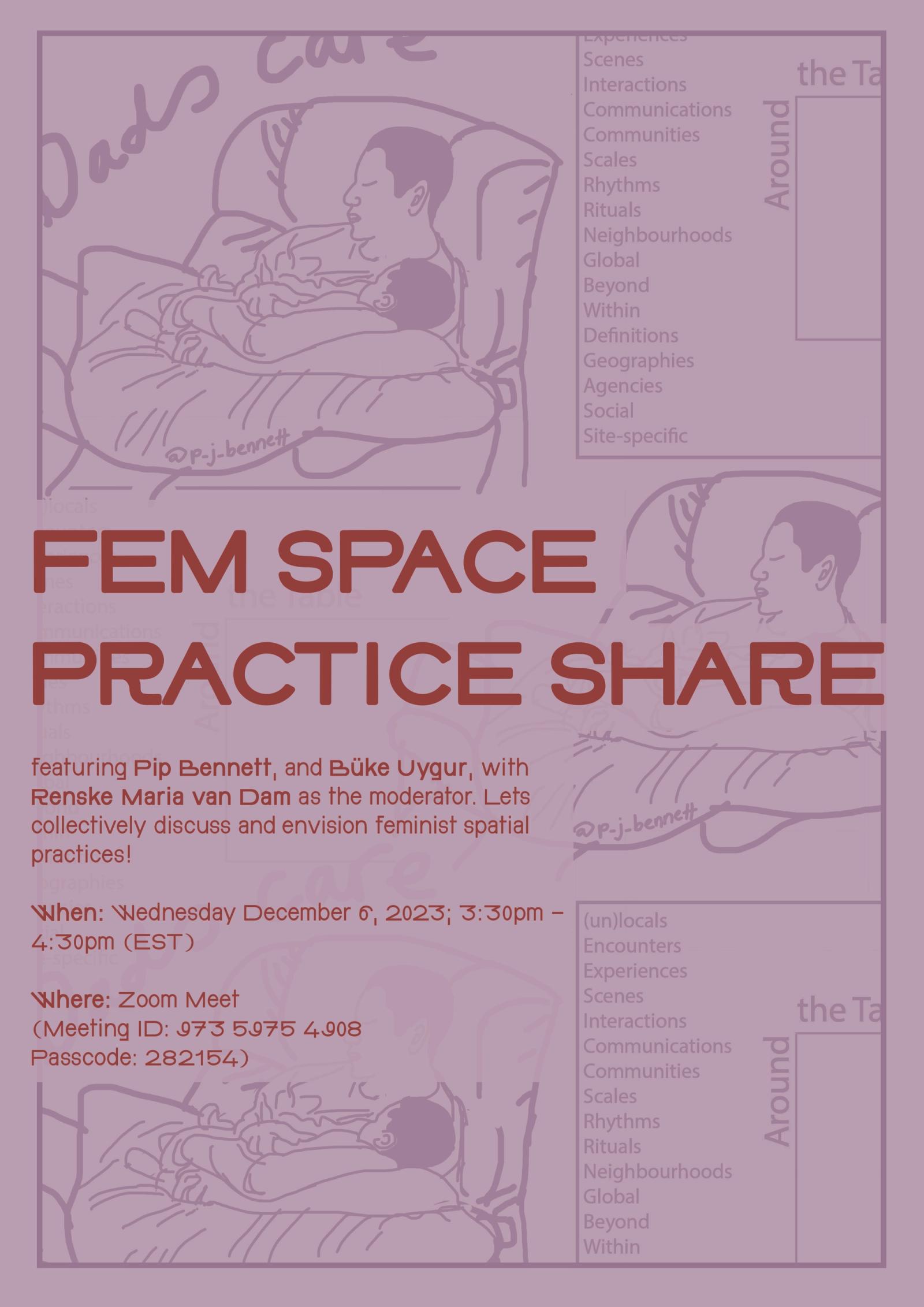
We are pleased to invite you to the third Feminist Spatial Practice Share on Wednesday December 6th from 3:30pm-4:30pm ET. We have initiated the online Practice Share as a way to celebrate feminist spatial practices and connect with likeminded practitioners across the globe. We are excited to invite Pip Bennett and Büke Uygur to present their practices, after which we will have a collective conversation mediated Renske Maria van Dam.
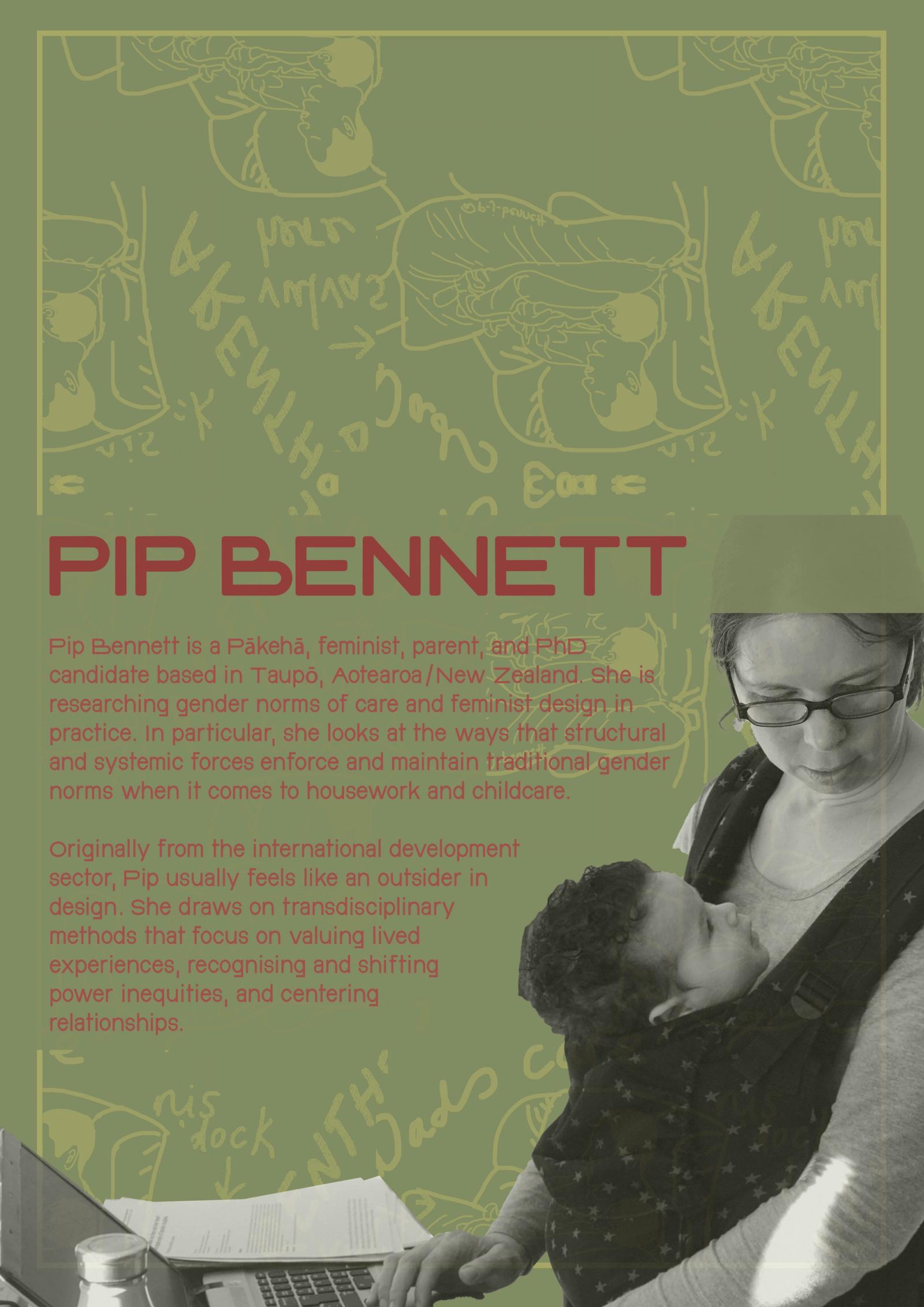
Pip Bennett is a Pākehā, feminist, parent, and PhD candidate based in Taupō, Aotearoa/New Zealand. She is researching gender norms of care and feminist design in practice. In particular, she looks at the ways that structural and systemic forces enforce and maintain traditional gender norms when it comes to housework and childcare. Originally from the international development sector, Pip usually feels like an outsider in design. She draws on transdisciplinary methods that focus on valuing lived experiences, recognising and shifting power inequities, and centering relationships.
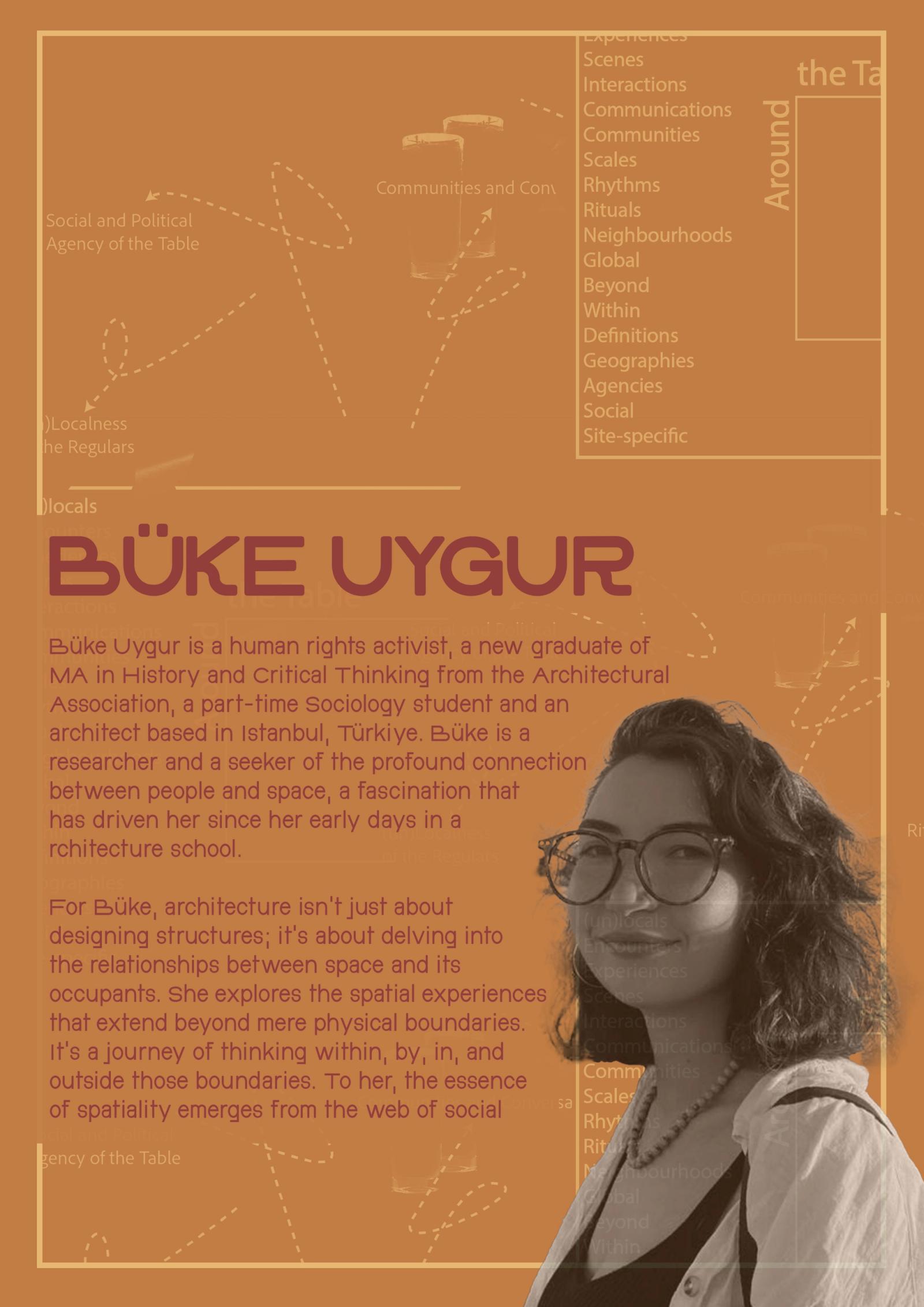
Büke Uygur is a human rights activist, a new graduate of MA in History and Critical Thinking from the Architectural Association, a part-time Sociology student and an architect based in Istanbul, Türkiye. Büke is a researcher and a seeker of the profound connection between people and space, a fascination that has driven her since her early days in architecture school. For Büke, architecture isn't just about designing structures; it's about delving into the relationships between space and its occupants. She explores the spatial experiences that extend beyond mere physical boundaries. It's a journey of thinking within, by, in, and outside those boundaries. To her, the essence of spatiality emerges from the web of social structures and dynamic interactions. She uncovers the relationships between various scales within spatiality, primarily focusing on objects and the decisions revolving around them. What fuels her inspiration are the micro-geographies within the broader landscape of space-making practices.